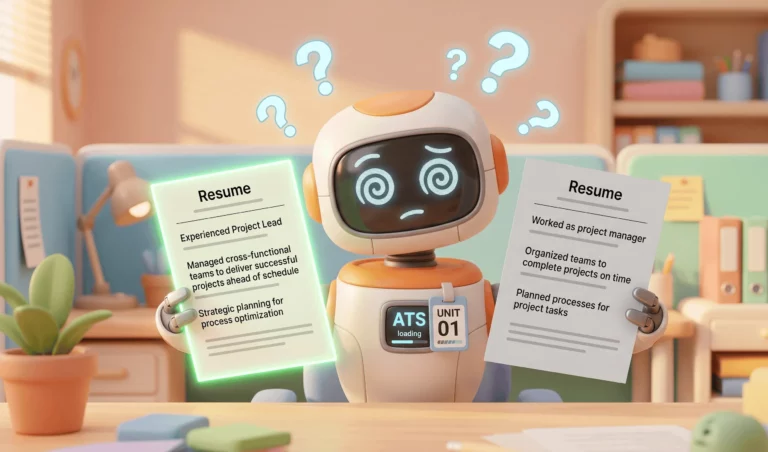

Can ATS see white text on a resume?

Yes, almost all of them. Modern parsing software reads the text layer of your resume. White text is included right alongside every other text in the document. Being detected means being in worse shape than not matching.
Keyword stuffing with white text was indeed a thing sometime during the period 2015-2019. Back then, most parsing engines created a visual rendering of the document and extracted visible text from that rendering. Hidden text remained hidden. However, that loophole hasn't existed for a while now.
Why parsing software sees white text
When you export a resume as a PDF, two different layers exist inside the file: the visual rendering layer and the text layer. What we mean by "parsing" here is actually the reading of the text layer. No rendering happens in advance.
Color is a visual feature. It's stored in the visual layer, which is why the text layer itself doesn't know about colors. Typing white text on a white background and typing black text are functionally the same thing. From the standpoint of parsing software, "python developer" written in black is found just as easily as "python developer" written in white.
That applies to Greenhouse, Lever, Workday, and Ashby. With Taleo, it can vary depending on implementation age, but most modern deployments behave the same way. Once systems stopped relying on visual rendering and shifted to text extraction, hiding content with color stopped working.
What happens when the software finds hidden text
Even when it "works" technically, it creates suspicion at review time. There isn't a reliable upside.
What to do instead
The underlying issue is real: missing job-description vocabulary reduces visibility in searches. The fix isn't hiding keywords - it's including them clearly in the visible text of your resume.
Same keywords, different placement. One risks flagging or rejection; the other supports both parsing and human review.
If keyword placement strategy is the real concern - where terms need to appear to actually get weighted - that's covered in the guide on passing screening without keyword stuffing. And for the full picture on how these systems read resumes across different platforms, see the main ATS keywords guide.